RESEARCH
Our research examines how people think, feel, act and experience themselves and the world around them — including their health and healthcare.
We bring together psychology, behavioural science, and data science, with particular interests in genomics, behavioural health, and mental health.
Across our research, we use qualitative, quantitative and data science approaches, alongside meaningful involvement and engagement with people with relevant lived experience, patients, the public and communities.
genomics · behavioural health · mental health
GENOMICS
Psychology Applied to Genomics
For more than two decades, Saskia Sanderson's research has examined the psychological and behavioural dimensions of genetics and genomics.
This programme examines how people understand, experience and respond to genomic information; how genomic information can influence psychological and behavioural outcomes; and how advances in genomics can be implemented responsibly and effectively in healthcare.
The research spans work conducted with collaborators in the US and UK, from studies of genomic risk information and personal genome sequencing through to participant and patient experiences of national genomic medicine programmes and the emerging integration of polygenic scores into healthcare.
eMERGE Network
Returning genomic information
Research conducted in the US examining people's understanding of and responses to genomic information, including the return of genomic results through healthcare and research.
HealthSeq
Personal genome sequencing
Research examining the psychological and behavioural implications of personal genome sequencing, including how ostensibly healthy adults understand and respond to genomic risk information.
100,000 Genomes Project
Participant experiences of genomic sequencing
Research with Celine Lewis and collaborators examining participant experiences, understanding and responses within the 100,000 Genomes Project.
NHS Genomic Medicine Service
Genomic medicine in healthcare
Research with Celine Lewis and collaborators examining patient experiences of genomic testing and the implementation of genomic medicine within routine NHS healthcare.
Polygenic Scores
From genomic risk prediction to clinical practice
More recent work examines the psychological and behavioural implications of polygenic scores and how they might be integrated responsibly into healthcare. Our 2025 work with Mike Inouye, published in Nature Human Behaviour, brings together evidence and recommendations for their responsible integration into clinical practice.
TEDx Talk
Would you have your genome sequenced?
TEDxGoodenoughCollege, 2018
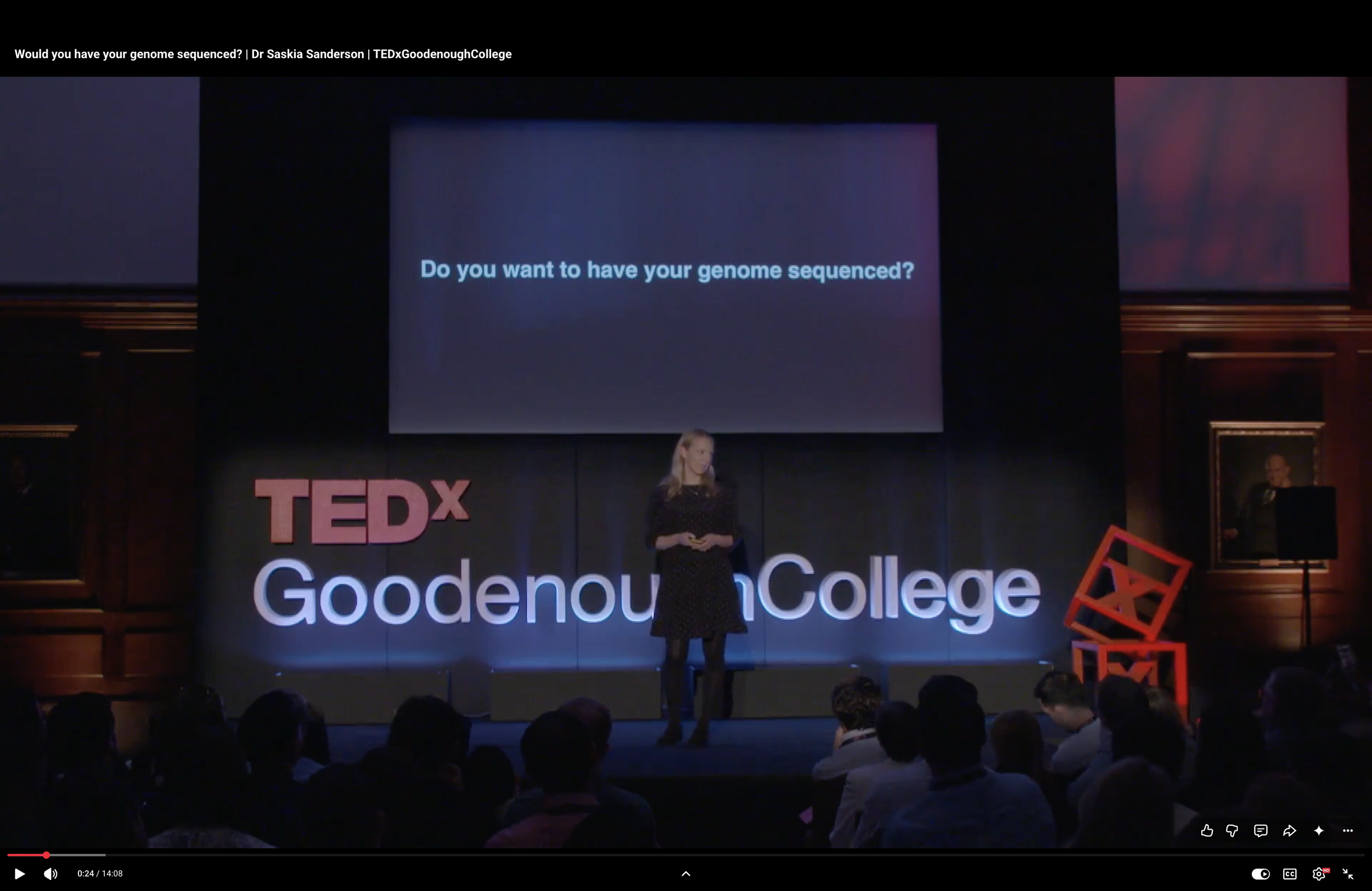
Would you have your genome sequenced?
TEDxGoodenoughCollege, 2018
BEHAVIOURAL HEALTH
The CMEBE Model of Behaviour
The Conscious Mind, Embodied Brain, Body and Environment (CMEBE) Model is a transdisciplinary framework for understanding behaviour and behaviour change.
The model proposes that behaviour emerges from continuous interactions between four domains: the Conscious Mind, Embodied Brain, Body and Environment. Rather than privileging any single level of explanation, CMEBE provides a framework for bringing together insights from psychology, behavioural science, neuroscience, physiology and the social and environmental sciences.
A central aim of the programme is to explore whether this framework can help researchers and practitioners understand behaviour more comprehensively — and design more effective approaches to behaviour change.
MENTAL HEALTH
From Listening to Impact
Our emerging mental health research brings together human experience, interdisciplinary collaboration and large-scale health data.
Human experience and national-scale data are sometimes treated as very different ways of understanding mental health. We are interested in what becomes possible when they are connected — combining what can be learned from large health datasets with what can be learned by listening to and working in partnership with people with relevant lived experience.
By bringing these different forms of knowledge and expertise together, we aim to ask better questions, design better research, generate more meaningful evidence and increase the potential for research to improve mental health and healthcare.
From Listening to Impact — IoPPN Research Festival 2026
Explore the talk →